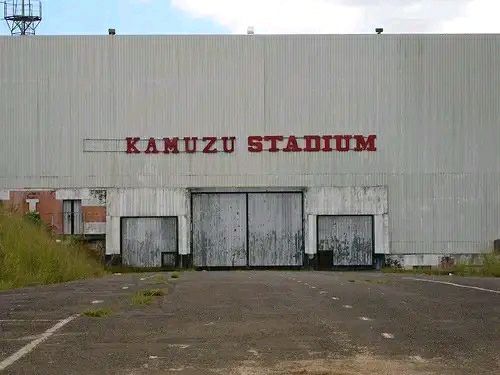
Malawi’s top-flight football has been plunged into uncertainty after FDH Bank suspended its K5 billion sponsorship of the FDH Bank Premiership, a decision triggered by the aborted league launch at Kamuzu Stadium.
What should have been a celebration, featuring Mighty Wanderers and Karonga United, devolved into an administrative impasse, exposing deeper governance contradictions between the Football Association of Malawi (FAM) and the Super League of Malawi (SULOM).
At the heart of the fallout lies a fundamental question: how can a league authority enforce club licensing standards when it appears unwilling to comply with them?
FAM’s club licensing framework is not ornamental. It is designed to professionalise the game, ensuring minimum standards in infrastructure, safety, and match-day operations.
On 13 April 2026, FAM published a list of venues that fell short of approval, including Kamuzu Stadium, Mzuzu Stadium and Nankhaka Stadium.
The message was clear: until deficiencies were rectified and verified, these venues were off-limits for elite competitions.
Yet, barely a week later, SULOM released fixtures naming Kamuzu Stadium as the venue for the league’s official launch. This decision set the stage for confrontation but FAM reiterated its position: no clearance, no match.
SULOM, however, argued it was addressing the shortfalls, citing interim measures such as mobile sanitation facilities and minor refurbishments to technical areas.
It invited FAM for an inspection, but the governing body declined, arguing the 48-hour window before kick-off was procedurally inadequate for a credible compliance audit.
What followed was a high-stakes standoff. SULOM insisted the event had “matured” and would proceed. FAM warned of sanctions. SULOM signalled willingness to absorb penalties, ostensibly to protect the sponsor’s brand.
In the end, the match did not take place after FAM instructed match officials not to report for duty, effectively pulling the plug on the launch.
The episode carries a strong sense of déjà vu.
In 2023, under then SULOM President Fleetwood Haiya and FAM President Walter Nyamilandu, a similar dispute arose over the use of Kamuzu Stadium despite its failure to meet licensing standards. At that time, SULOM resisted FAM directives.
The roles have since changed, with Haiya now leading FAM while SULOM is under Colonel Gilbert Mittawa. Yet the institutional friction remains, suggesting the issue is less about personalities and more about systemic governance weaknesses and blurred lines of authority.
FDH Bank’s reaction underscores the commercial stakes. Having invested heavily in branding and activation around the launch, the sponsor sought emergency intervention, even appealing directly to FAM for provisional approval.
The Ministry of Youth and Sports also weighed in, urging flexibility, but FAM’s refusal was deliberate. Granting an exception would have undermined the integrity of the licensing regime it seeks to entrench.
In regulatory terms, selective enforcement is indistinguishable from non-enforcement.
For FDH, however, the reputational damage was immediate. A high-profile launch collapsed in public view, casting doubt on the league’s organisational reliability.
The suspension of sponsorship pending a review of economic viability is therefore not merely punitive. It is a rational response to governance risk.
The contradiction is stark. SULOM, as the custodian of the elite league, is mandated to enforce standards among member clubs. Yet in this instance it positioned itself in opposition to the very framework it is meant to uphold. This raises uncomfortable questions about enforcement legitimacy. If the regulator defies the rules, on what basis can it discipline clubs?
FAM, for its part, emerges as a strict enforcer, but not without consequence. Its hardline stance protected principle but at the cost of a key commercial relationship and the league’s public image.
In governance terms, it chose institutional integrity over short-term optics. With FAM elections looming next year, it is difficult to ignore the political subtext.
Administrative rigidity and defiance can, in such contexts, double as signalling aimed at constituencies within the football ecosystem.
Whether this episode is purely regulatory or partially political is open to interpretation, but the timing invites scrutiny.
The immediate priority is alignment. Malawi’s football cannot afford a duality where its governing body and league administrator operate at cross-purposes.
Ultimately, this is not just a dispute over a venue. It is a stress test of Malawi football’s governance architecture.
Until its custodians speak with one voice and act within the same rulebook, the game will remain vulnerable, not just to internal conflict, but also to the erosion of the very partnerships that sustain it.
Photo: Social media