There is an old English saying that goes, “A poor craftsman blames his tools”.
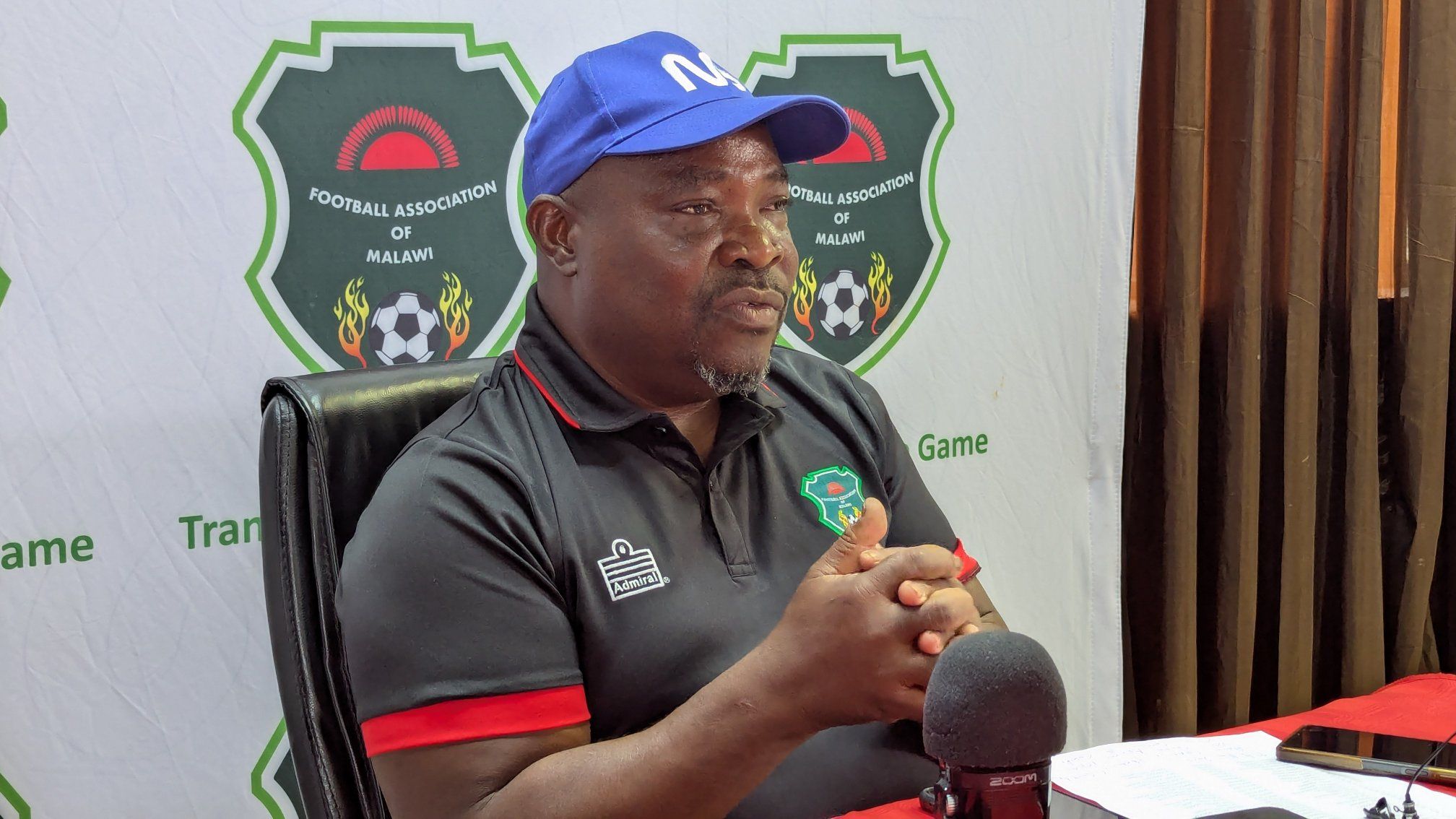
In the aftermath of Malawi’s 3–2 defeat to India at the 2026 FIFA Women’s Series in Kenya, Scorchers head coach Lovemore Fazili appeared to do just that.
In his post-match remarks, Fazili questioned the commitment of his foreign-based players, suggesting that locally based talent had shown greater hunger when he said “We have local players who are doing much better. The professionals are not giving 100% performance,” an assertion that raises more questions than it answers about leadership, selection, and tactical direction.
Such public criticism comes at a delicate moment for Malawi as the team builds toward the upcoming Women’s Africa Cup of Nations in Morocco.
Rather than reinforcing cohesion and clarity, Fazili’s comments risk exposing uncertainty within the squad, hinting at a coach who may be second-guessing his own decisions at a crucial stage of preparation.
Once a rising force in regional women’s football, the Scorchers now appear to be losing their edge.
With momentum fading and performances becoming increasingly inconsistent, the team that once inspired belief is beginning to look fragile — its early promise flickering as the countdown to Morocco intensifies.
The numbers underline the concern. Under Fazili, the Scorchers have managed just five wins in their last 15 matches, a run that reflects a troubling pattern rather than isolated setbacks.
Early exits at the COSAFA Women’s Championship in consecutive years since their 2023 triumph, followed by another disappointing campaign in 2024, point to a side struggling to evolve.
That pattern has continued into 2026.
A 2–0 opening defeat to South Africa at the COSAFA Women’s Championship set the tone for another early elimination, and the subsequent showing at the FIFA Series in Kenya – culminating in back-to-back losses – has only deepened concerns that the Scorchers are regressing at the very moment they should be consolidating progress.
A 5–0 humiliation against Australia and a 3–2 defeat to India have reignited a difficult question: is coach Lovemore Fazili tactically equipped for the modern international game?
This is no longer just about results. It is about patterns – recurring tactical flaws that continue to cost Malawi at crucial moments.
One of the clearest criticisms of Fazili’s approach is its reactive nature.
When facing stronger opponents, Malawi consistently drops deep early, concedes possession and waits to absorb pressure rather than disrupt it. This approach proved disastrous in their match against Australia.
Sitting back invited wave after wave of attacks, eventually leading to a five-goal collapse.
Modern football, even for underdogs, demands structured pressing triggers and transitional intent. Fazili’s system, by contrast, appears passive and outdated.
Conceding eight goals in two matches is not just about individual errors – it signals systemic failure.
Under Fazili, defensive lines are often too stretched, midfield protection is inconsistent and full-backs are frequently exposed in wide channels.
The result? Opponents find space between lines and behind the backline with alarming ease.
Against India, Malawi conceded at critical phases, just before halftime and late in the match.
That points not to bad luck, but to poor in-game management and structural fragility. Elite-level coaching requires adaptability. Fazili’s Malawi often looks tactically rigid.
Across both matches, there was little visible change in shape when under pressure. Substitutions did not significantly alter game tempo and there was no clear plan B emerging when plan A failed.
For example, after going behind against India, Malawi continued with the same attacking patterns instead of overloading wide areas, increasing midfield compactness and adjusting pressing intensity. This rigidity allows opponents to predict and control the game narrative.
In addition, game management is where coaching influence is typically most visible – but it is now where Fazili’s shortcomings stand out.
Key issues include inability to slow the game when leading or level and failure to close out phases of pressure.
Against India, Malawi fought back twice, yet still lost. That suggests not a lack of effort, but a lack of tactical control in decisive moments.
Another recurring flaw is the dependence on standout players rather than system efficiency.
Malawi’s attacking threat often relies on moments of individual skill like the tap-in made by Deborah Henry for the 2-2 equaliser from a corner, set-piece goal by Ireen Khumalo and isolated counter-attacks.
When key players are absent or neutralised, the system struggles to produce chances. For instance, Temwa and Tabitha Chawinga have single-handedly changed the team’s fortunes with their quality and individual brilliance in terms of ball carriage in the final third and carving open defences.
However, a tactically strong side creates repeatable and varied attacking patterns. However, Malawi under Fazili relies too often on player improvisation.
Fazili has been in charge long enough to imprint a clear tactical identity. Yet the team still shows inconsistent defensive shape, unclear pressing structure and limited cohesion against stronger opposition.
This raises a critical concern: Is the team improving tactically or merely competing through effort and talent?
To be fair, coaching does not happen in a vacuum as Fazili faces real constraints such as limited resources as compared to elite nations, infrequent high-level international exposure and player availability challenges like missing Temwa and Tabitha Chawinga.
To his credit, he has also guided the Scorchers to WAFCON qualification, a notable achievement.
However, at the international level, results alone are not enough. The manner of performance matters and that is where scrutiny intensifies.
The defeats in Kenya may prove to be a turning point because they have exposed not just a gap between Malawi and elite teams, but potentially a tactical ceiling under Lovemore Fazili.
The question now is not whether he has done well in the past, but whether he can evolve.
This is because at this level, football is unforgiving. If the system does not improve, the results will not either.