When the final whistle sounded at the KMC Complex in Dar-es-Salaam on Wednesday, it told a familiar story for the Malawi Women’s National Football Team.
Another defeat. Another missed opportunity. But once again, another optimistic assessment from head coach Lovemore Fazili.
The Scorchers’ 1-0 loss to Tanzania’s Twiga Stars may have come in a friendly match, but it has intensified growing concerns about Malawi’s readiness for the upcoming Women’s Africa Cup of Nations (WAFCON) in Morocco.
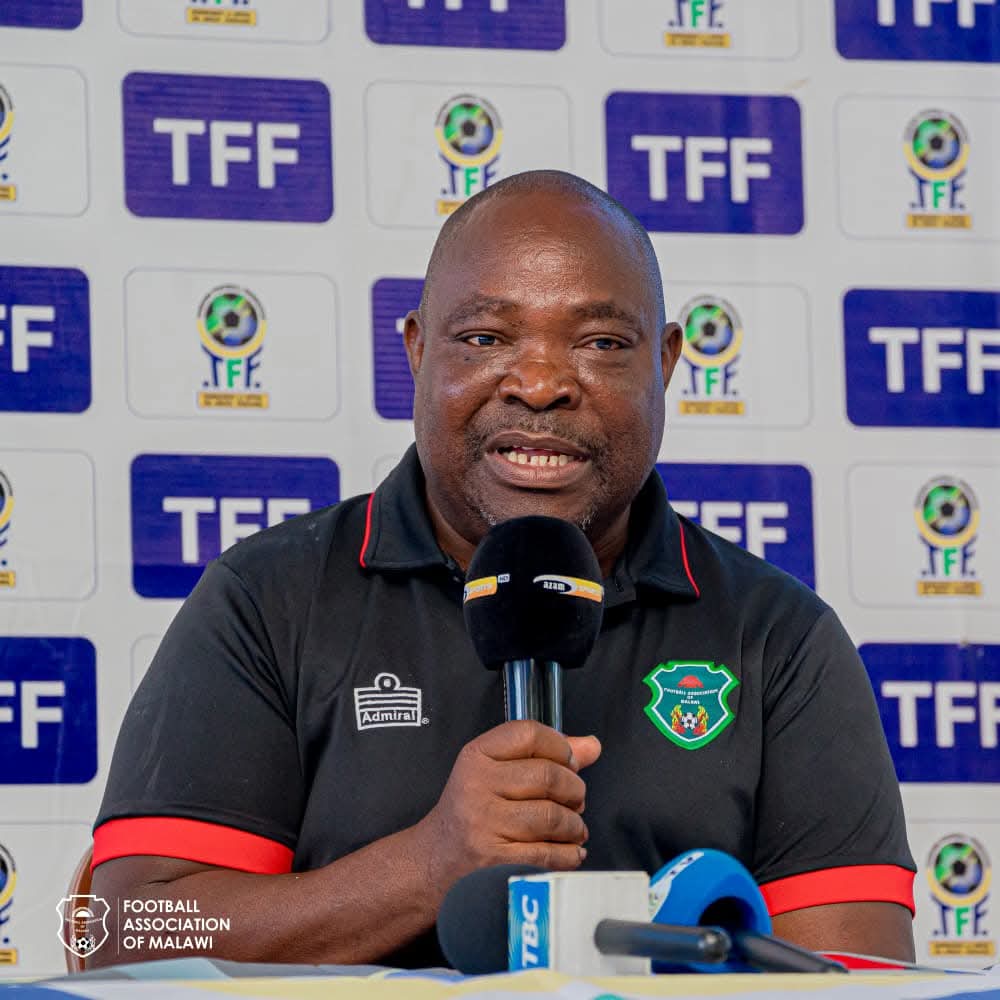
Despite the defeat, Fazili remained upbeat.
“The game was okay. I’m not very worried about the result because what makes me happy is that we managed to go forward and create a lot of chances,” he said after the match.
He even suggested Malawi could have won by four or five goals had they converted their opportunities.
However, football is ultimately measured by outcomes, and increasingly, there appears to be a widening gap between Fazili’s positive post-match narratives and what is unfolding on the pitch.
The loss to Tanzania did not occur in isolation. It is merely the latest chapter in a worrying sequence of underwhelming performances by a side that should be building momentum ahead of its historic WAFCON appearance.
In the last two years, the Scorchers have struggled to replicate the form that saw them win the COSAFA Women’s Championship in 2023.
Since that triumph, Malawi has suffered successive group-stage exits at COSAFA tournaments, lost heavily to stronger opposition, and failed to establish consistency against teams that will provide the benchmark at continental level.
The defeat against Tanzania is particularly concerning because it came against a fellow WAFCON participant.
While Tanzania are undeniably a stronger side on paper, ranked 121st in the world and 15th in Africa, compared to Malawi’s 153rd global ranking, the match was supposed to provide evidence that the Scorchers are closing the gap.
Instead, it exposed familiar weaknesses.
Malawi created chances but failed to score. Malawi competed but failed to win. Malawi showed promise but ultimately lost.
Those themes have become recurring features of Fazili’s tenure.
For clarity sake, there is nothing inherently wrong with a coach remaining positive after defeat. In fact, optimism can be a valuable leadership trait.
However, when defeats become repetitive and are continually accompanied by explanations about positives rather than solutions to persistent shortcomings, questions inevitably arise.
Before travelling to Tanzania, Fazili described the matches as crucial assessments of Malawi’s readiness for WAFCON.
He stressed the importance of identifying strengths and weaknesses and promised performances that would give Malawians confidence.
Yet, after the first test, Malawi failed to pass the examination. Instead of hearing detailed reflections on tactical adjustments, finishing deficiencies, or structural improvements required before Morocco, supporters were again presented with assurances that everything was largely satisfactory.
The challenge for Fazili is that football supporters and analysts are increasingly looking beyond encouraging sound bites. They are looking for tangible progress.
Against elite opposition, Malawi continues to struggle defensively. Against organised teams, they often lack a cutting edge in attack. Against fellow WAFCON qualifiers, victories remain elusive.
The recent FIFA Women’s Series in Kenya exposed those shortcomings brutally. A 5-0 defeat to Australia highlighted defensive vulnerabilities. A 3-2 loss to India revealed difficulties in game management and tactical adaptability.
The COSAFA Women’s Championship saw another early exit despite the tournament being viewed as an important stepping stone towards WAFCON.
Now Tanzania have added another setback.
What is particularly alarming is that the same issues keep resurfacing regardless of opposition.
Poor conversion of chances. Defensive lapses. Inconsistent game management. Limited tactical flexibility.
At some point, recurring weaknesses stop being isolated incidents and become indicators of deeper structural problems.
To his credit, Fazili successfully guided Malawi to a historic WAFCON qualification. That achievement deserves recognition and should not be diminished.
However, qualification and competitiveness are two different objectives.
The challenge facing Malawi now is not merely participating in Morocco but proving they belong there.
That requires tactical evolution.
Modern international football demands compact defensive structures, intelligent pressing systems, efficient transitions, and the ability to adapt during matches.
Yet Malawi often appears reactive rather than proactive. When things go wrong, solutions are rarely visible from the touchline.
When opponents gain momentum, tactical adjustments frequently arrive too late or fail to alter the course of matches.
The result is a team that often relies on individual brilliance rather than a clearly identifiable system.
Without the exceptional talents of players such as Temwa and Tabitha Chawinga, the Scorchers have struggled to consistently impose themselves against quality opposition.
Time is becoming an increasingly important factor.
Every friendly match was designed to sharpen Malawi’s preparations and provide confidence ahead of Africa’s biggest women’s football tournament.
Instead, recent results have generated more questions than answers.
While Tanzania’s superior ranking suggests they should be favourites, WAFCON preparation is not solely about winning matches.
It is about demonstrating progress. It is about reducing mistakes. It is about building confidence and establishing a tactical identity.
So far, Malawi have shown flashes of quality but little evidence of sustained improvement.
Football is a results business, and recent evidence suggests his words are increasingly failing to align with performances.
For too long, defeats have been accompanied by explanations centred on positives, potential and what might have been.
The problem is that WAFCON will not be decided by encouraging performances, possession statistics or missed opportunities. It will be decided by goals, victories and tactical execution.
As Morocco draws closer, the uncomfortable reality confronting the Scorchers is that optimism alone will not close the gap between ambition and achievement.
If Malawi are to avoid becoming mere participants at WAFCON, Fazili must deliver more than positive press conferences.
He must deliver results because, at this stage of preparation, words are no longer enough.