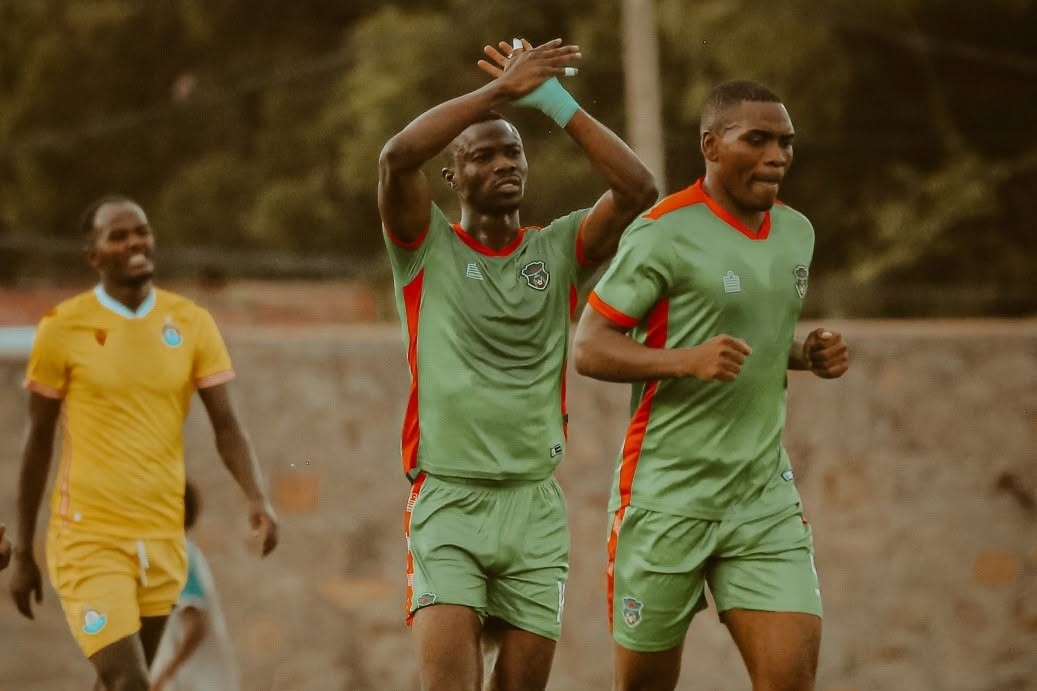
When the Malawi National Football Team, the Flames, lined up at Dire Dawa International Stadium for their second international friendly against Ethiopia, there was an expectation that they would respond positively after losing their first encounter with Tanzania on Saturday.
Friendlies are not necessarily judged by results alone. They are often platforms for experimentation, tactical adjustments and player assessment.
However, they also provide an opportunity to demonstrate ambition, adaptability and a winning mentality.
Following Tuesday’s 1-1 draw against Ethiopia, an uncomfortable question emerges: were the Flames genuinely trying to win the match, or were they primarily focused on avoiding another defeat?
Malawi began the match with commendable intensity. The Flames pressed high and looked determined to unsettle the hosts. Within three minutes, enterprising striker Mwisho Mhango had an opportunity to give Malawi an early lead but failed to hit the target.
The opening exchanges suggested a team eager to impose itself on the game. However, that early momentum proved short-lived.
As the match settled, Ethiopia began to dominate possession and dictate the tempo. The hosts displayed superior technical quality, comfortably manipulating the ball in tight spaces and consistently bypassing Malawi’s press.
From around the tenth minute onwards, Ethiopia became the dominant force. They controlled possession, varied the pace of their attacks and forced the Flames into prolonged periods of chasing shadows.
Ironically, it was Malawi who found the breakthrough.
Against the run of play, Babatunde Adepoju capitalised on a defensive lapse to score in the 18th minute and registered his first international goal for the Flames.
Yet the goal did little to alter the overall flow of the contest.
Rather than building on the lead, Malawi continued to spend long periods without the ball.
The attacking combinations remained predictable, and the team struggled to create clear-cut opportunities from structured play.
The partnership between Mwisho Mhango and Chifundo Mphasi showed occasional promise, while Gaddie Chirwa’s pace caused problems down the right flank. However, the final ball by Gaddie Chirwa repeatedly let Malawi down.
The inability to combine effectively in the final third remains one of the Flames’ biggest tactical weaknesses under coach Kalisto Pasuwa.
One of the major observations from the match was the lack of cohesion in Malawi’s pressing structure.
Pressing is not simply about running towards opponents. It requires synchronised movement, collective triggers and compact spacing between players.
Babatunde frequently initiated the press, but support from teammates was often delayed or absent altogether. This allowed Ethiopia to play through the pressure with relative ease.
As fatigue began to set in, Malawi’s defensive shape became increasingly stretched. Ethiopia found large pockets of space inside the Flames’ half and repeatedly exploited them.
The warning signs were evident before the equaliser. Ethiopia struck the post from a corner and continued to pile pressure on Malawi’s defence.
Eventually, Binyam Belay equalised in the 41st minute, a goal that reflected the balance of play.
If Malawi had intended to push for victory after the break, little evidence of that ambition was visible.
The second half began with Ethiopia once again controlling proceedings. The hosts immediately forced a corner and continued to pin the Flames deep inside their own half.
Malawi struggled to progress the ball through the midfield and frequently resorted to long clearances.
Goalkeeper Williams Thole repeatedly launched hopeful balls forward, but these rarely produced positive outcomes. Instead, possession was routinely surrendered back to Ethiopia.
The approach raised concerns about Malawi’s ability to build attacks from the back. Modern football increasingly demands teams capable of constructing attacks through controlled possession, especially when under pressure. The Flames appeared uncomfortable in this aspect of the game.
Another area that highlighted Malawi’s limitations was the contribution from the fullback positions. McDonald Lameck and Emmanuel Nyirenda worked hard defensively but offered little attacking penetration.
In contemporary football, fullbacks are often expected to provide width, deliver crosses and create overloads in advanced areas. Lameck’s primary offensive weapon remained his long throw-ins, while opportunities to overlap or supply quality deliveries into the penalty area were scarce. As a result, Babatunde frequently became isolated, receiving minimal service from wide areas.
One of the few quality deliveries arrived in the 61st minute when Chifundo Mphasi produced an excellent cross, only for Babatunde to waste the opportunity.
Significantly, that chance represented one of the rare moments when Malawi successfully connected with their striker in a dangerous position.
Perhaps the strongest evidence that Malawi were satisfied with the draw lies in the nature of their substitutions. At 1-1, the Flames had every opportunity to chase a winning goal. Instead, the changes appeared conservative.
Festus Duwe replaced Mhango in the 67th minute, while later substitutions saw Blessings Singini and Mphasi make way for Yankho Singo and Ephraim Kondowe.
The introduction of Singo particularly raises tactical questions. As a holding midfielder, Singo is naturally inclined towards protecting possession and shielding the defence. Bringing on a like-for-like defensive-minded midfielder when the match was level suggested a desire to maintain stability rather than increase attacking threat.
If the objective was to win the game, many would argue that introducing an additional striker or a more attack-minded player would have been the logical option. Instead, the substitutions appeared designed to preserve the result.
There is no doubt that avoiding defeat away from home can be viewed positively, especially after losing the previous friendly. The Flames surely showed resilience and defensive commitment for large portions of the contest. However, football is also about intent.
When analysing the overall performance, Ethiopia looked far more likely to score a second goal than Malawi. The hosts controlled possession, territory and attacking momentum.
The Flames rarely demonstrated sustained attacking ambition after taking the lead, and their second-half approach suggested caution rather than adventure.
For a team preparing for competitive assignments in the Africa Cup of Nations qualifiers ahead, that mentality raises concerns.
The evidence from Dire Dawa suggests that after going ahead and later being pegged back, Malawi gradually shifted from trying to win the match to trying not to lose it.
The conservative substitutions, inability to sustain attacks, reliance on long balls and lack of attacking adjustments all point towards a team content with securing a draw.
While there is value in grinding out a result away from home, the Flames must be careful not to develop a mentality where avoiding defeat becomes more important than pursuing victory.
Against stronger opposition in future competitions, merely staying in the game may not be enough.
Sometimes the difference between progress and stagnation lies in the courage to chase a win when the opportunity presents itself.