
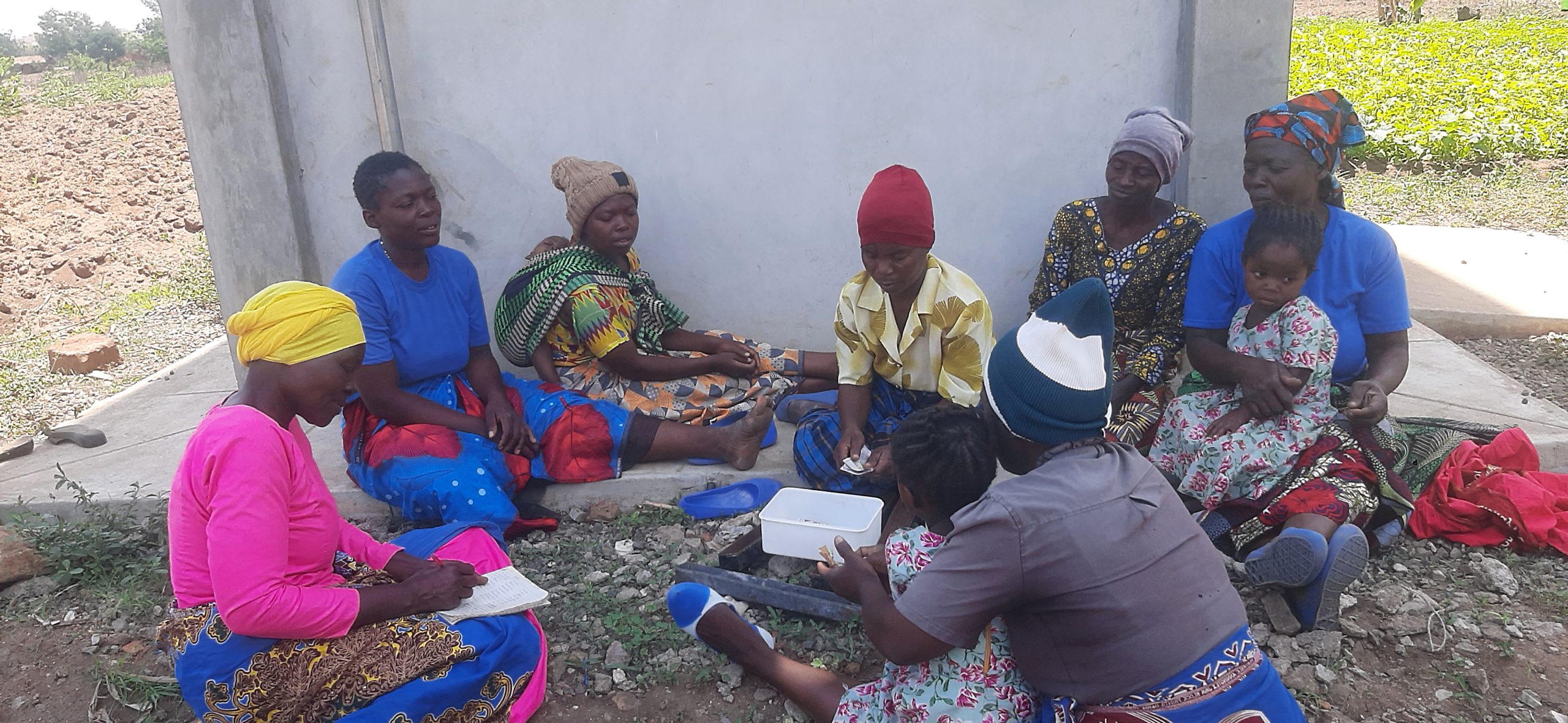
In Zomba District in the Southern Region of Malawi, women farmers are combining organic manure, irrigation, village savings and small businesses to protect their families against food insecurity and economic hardship. Their experiences demonstrate why investing in women farmers is essential to building climate-resilient food systems.
Women farmers supported by National Smallholder Farmers Association of Malawi (NASFAM) in Dzaone Extension Planning Area-EPA in Zomba, were grouped into clubs so that they are reached easily as a group at once.
The women took advantage of this grouping that was established for providing extension services to be a Village Savings and Loans Association (VSLA) that would help them with loans to purchase farm inputs and start up small-scale businesses.
They bank shares, get loan and pay back with reasonable interests to make sure all members participate and benefit from this facility. This approach helped these women to beat poverty and hunger.
For years, hunger was a painful reality in Violet Ganizani’s household in Traditional Authority Chikowi, Zomba District. Struggling to provide enough food for her family, she eventually left home in search of better livelihood opportunities. She migrated to Mzimba District in Malawi’s Northern Region, where she and her family worked as tenants on tobacco estates.
Today, Violet is taking steps towards a more secure future. Through irrigation farming, village savings and a small-scale business, she is diversifying her sources of income and working to ensure that her family has enough food throughout the year.
Her transformation began after she returned home following the 2022 farming season and saw other women making progress in agriculture. The women in the village were food secure and each of them ran a small-scale business. They were using manure to improve soil fertility, practising irrigation farming and accessing loans through village savings groups.
Inspired by this, Violet joined Ching’oma Women Club, where she began exploring new ways of farming and earning an income.
“I am able to get a loan from the village bank and buy inputs for my farm while I support my household through the small business I am operating. I have just transplanted 15,000 tomato seedlings for this season, from which I expect to earn more than K300,000 net profit after sales when they mature,” she says.
For Violet, irrigation farming has opened opportunities to produce tomatoes beyond the main rainy season as she realises more than one tonne of tomatoes per harvest. However, she notes that production alone cannot guarantee a stable income, especially during harsh weather conditions.
“Through irrigation, we harvest tomatoes three times a year, totalling up to two tonnes in dry season alone which provides two harvests. However, there are times, especially during the rainy season, when tomatoes do not do very well, since managing the farm is expensive because there are a lot of pests and diseases. Processing some tomatoes into sauce and powder can help us earn more than K500,000,” she says.
By combining farming with small business activities such as a tuck shop, Violet is ensuring food security and financial support to her household. Her story reveals a broader challenge farmers face in Malawi how to sustain food availability at households when climate variability occurs, higher input costs and limited access to financial resources make farming far more difficult.
For Violet, membership in a village savings group has greatly provided an opportunity to borrow money for farm inputs such as seeds and pesticides without relying entirely on external financial institutions which most of the times come with unbearable conditions.
For Dollah Magwira, a 38-year-old member of Umodzi Club, the solution to these challenges is the use of composite manure for both irrigation and rain-fed agriculture. She has used manure for four years combining with only 10 kilograms of either Urea or NPK fertiliser. The fertiliser is mixed with ash, maize bran, chicken or pig manure, and water and then left to ferment for three weeks.
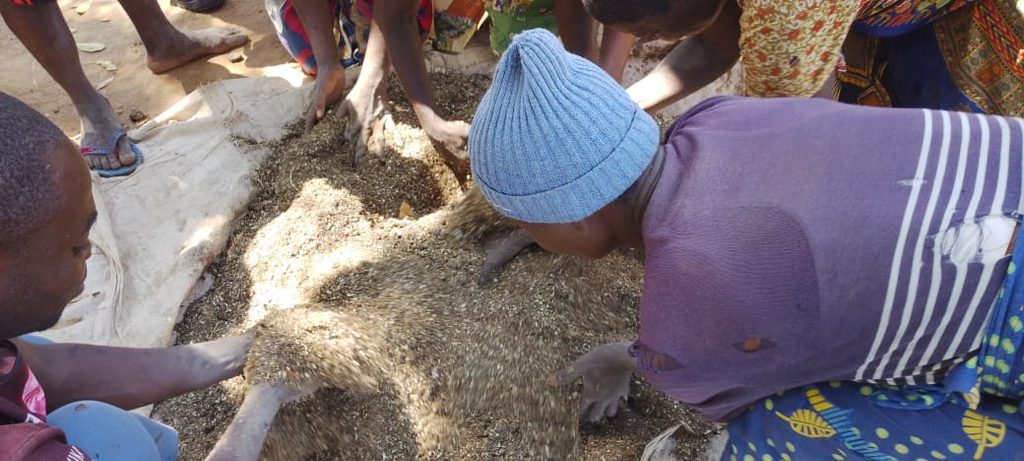
Magwira’s experience proves how locally available farming practices can work as a strategy for climate adaptation.
Previously, she used to harvest not more than five bags but now she harvests more than 30 bags of maize from rain-fed and irrigated farming combined. She also grows onions and other vegetables, which she sells to support her household and meet her children’s educational needs, including buying exercise books and uniforms and paying school fees of up to K120,000 per annum.
Innocent Tamandani, a NASFAM extension officer for the area, was impressed by the women’s commitment and unity. This provided an opportunity to support their entrepreneurial ambitions.
NASFAM supports 13 women clubs in Dzaone Planning Extension Area (EPA) alone with manure-making, crop management, harvesting and grading, as well as links to reliable markets. The organisation also provides weather forecasts to help farmers understand expected conditions and plan their activities.
Tamandani says they encourage the women to be in clubs, establish VSLAs so that they may have access to loans that can help them purchase farm inputs and also enable them to start small-scale businesses since formal financial institutions are located far from the area.
The National Census on Agriculture (NACA) 2025 report highlights that “Village Savings and Loans Associations (VSLAs) were the commonest source of credit for most households, accounting for 21.7 percent, surpassing other lending sources.”
This is a clear indication that VSLAs, if well managed, can be of great value to the rural women farmers to boost their production and small-scale businesses.
Chapter 14 of the Convention on the Elimination of All Forms of Discrimination against Women (CEDAW) precisely calls for inclusion of rural women to ensure they benefit from rural development.
It cites opportunities such as agricultural credit and loans, marketing facilities, appropriate technology, training and extension services, as well as equal access to land.
In the area of Traditional Authority Nkapita, another women’s group demonstrates how combined action can create opportunities for women.
Mwananyamula Club, based in Chipini, brings together young and older women who share their experiences, generate new skills and discover ways to improve their livelihoods.
Asiatu Smart, 23, joined Mwananyamula Club after becoming pregnant and dropping out of school in 2023. At the time, she was indeterminate on how she would provide for herself and her child.
She says joining the club made her adopt farming practices and explore opportunities she had not considered before.
“My child was malnourished before I joined the club, but learning about farming has helped to make six to 10 bags of maize for food available in my household every year,” she says.
Asiatu says making and using manure has also relieved her from the pressure of sourcing money to buy fertiliser, which has become increasingly expensive and costs about K180,000 per 50-kilogram bag.
According to the NACA 2025 report, “52.6 percent of the Malawi population are females, while 47.4 percent are males. By regions, 53.2 and 46.8 percent of the population in the Southern Region are females and males respectively”. Zomba District is located in the Southern Region where most households are woman headed.
A recently released CGIAR Gender Equality and Inclusion Accelerator report highlights opportunities to reduce gender inequality in low- and middle-income countries through a set of targeted solutions, from institutional, legal and social reform, to inclusive infrastructure, social protection, improved data-gathering and the responsible use of emerging technology.
It provides a blueprint with proven solutions for policymakers, funders, the private sector and key actors on how to close gender gaps by 2050 through food systems transformation.
“The choices we make over the coming years will determine whether food, land, and water systems become more equitable or more unequal, more resilient or more fragile. We cannot feed our future without including women in our food systems,” said Ismahane Elouafi, Executive Managing Director of CGIAR.
Group Village Headman Kazembe in Traditional Authority Chikowi in Zomba District, whose village hosts Umodzi Women’s club, says empowering women through agriculture and income-generating activities has contributed to mindset change in many families where women have become self-reliant and no longer depend on men on some family needs such as their own clothes and home utensils.
(Written with support from MESHA and CGIAR)
