

FCB Nyasa Big Bullets did not just win the Blantyre derby: they adapted to it.
Mighty Wanderers’ intensity won them the first half, but when Bullets matched that energy after the break, the Nomads ran out of answers.
Trailing 1-0 at half-time, Bullets came from behind to win 2-1 at Bingu National Stadium in Lilongwe, completing a league double over their fiercest rivals and strengthening their grip at the summit of the FDH Bank Premiership.
The comeback was not merely about character. It was a tactical contest that exposed the difference between a team capable of sustaining its approach and one whose game depended heavily on intensity.
Wanderers started in a 4-5-1, pressing aggressively, marking man-to-man and suffocating Bullets’ attempts to build from the back. Their energy around the ball, particularly in midfield, disrupted Bullets’ rhythm and prevented them from establishing control.
Daniel Kudonto, Blessings Singini and Blessings Nahipa were relentless in the central areas, winning second balls, closing passing lanes and overwhelming Wongani Lungu and Chawanangwa Gumbo.
Bullets’ midfield struggled to get on the ball, let alone dictate proceedings.
Wanderers’ opener was a product of that pressure. Prince Chiumia was dispossessed by Gaddie Chirwa, who played centrally before the ball was spread to Stanley Sanudi. Sanudi attacked from the left and delivered into the box for Lameck Mithi to finish.
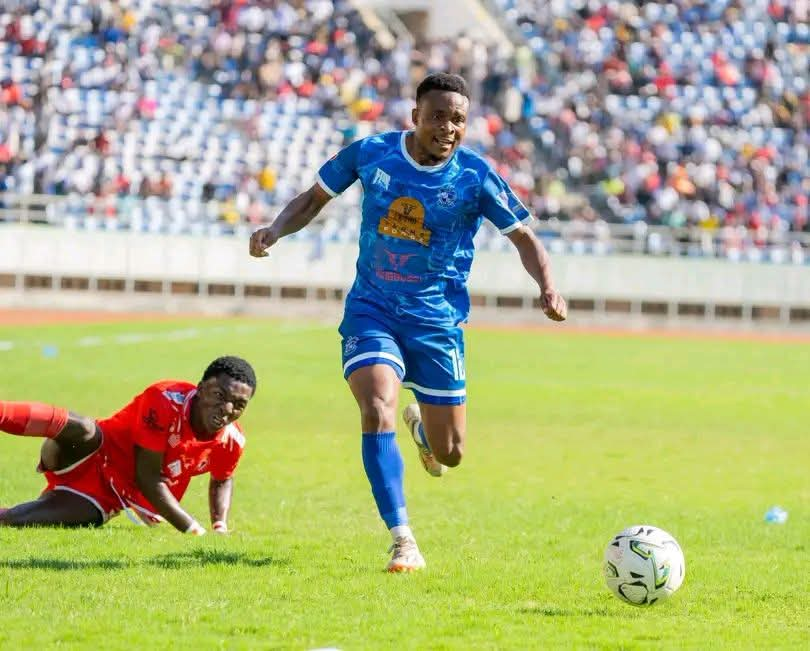
It was a deserved lead. Wanderers were hungrier, sharper in their pressing and more aggressive in winning possession.
Chiumia’s struggles defensively offered the Nomads a clear route into the final third, which they repeatedly threatened to exploit.
Yet, beyond the pressing intensity and counter-pressing, Wanderers’ attacking play offered limited evidence of a sustained structure to control the game. Their threat was largely driven by winning the ball, attacking quickly and relying on individual initiative, particularly from Chirwa and Sanudi.
That approach worked while Bullets were unsettled, but it became less effective as the game progressed.
Coach Wedson Nyirenda recognised the problem early, withdrawing Wongani Lungu for Maxwell Phodo before the half-hour mark.
Bringing on a forward alongside Tinaye Tsimba gave Bullets a more direct outlet and greater presence against Wanderers’ defensive line.
The change gradually helped Bullets find their footing. As Wanderers’ intensity dipped, Bullets began creating opportunities through their wide areas, with Mologeni’s deliveries and quicker forward movements causing problems.
The second half, however, required Bullets to do more than simply capitalise on Wanderers’ fatigue.
They needed to match the physical battle they had lost in the opening 45 minutes.
Nyirenda introduced Paul Master for Chawanangwa Gumbo at the restart, further strengthening his attacking options.

Later, George Chawomba and Ephraim Kondowe came on for Misheck Biliat and Clever Kalambo, pushing Bullets towards a more aggressive attacking setup.
The equaliser arrived on 59 minutes when Mologeni delivered a cross and Tinaye Tsimba headed home.
It was a turning point. Bullets were now winning more duels, competing for second balls and moving forward with greater conviction, while Wanderers were increasingly struggling to maintain their earlier intensity.
As the game opened up, gaps began appearing between Wanderers’ midfield and defence. Bullets were better positioned to exploit them, and their growing attacking numbers forced the Nomads to retreat rather than press with the same conviction.
Wanderers made changes of their own, introducing Sama Tanjong and Isaac Kaliati, followed by Mphatso Kamanga, before Promise Kamwendo and Clement Nyondo came on late. But the substitutions did little to restore the collective energy or control that had defined their first half.
Wanderers had a spell around the 80th minute, forcing Nyasulu into two important interventions, but they could not sustain the pressure. Their pressing became less coordinated, their defensive distances widened, and Bullets increasingly found spaces to attack.
By the closing stages, Nyirenda had four strikers on the pitch, an aggressive gamble that sacrificed conventional midfield balance for greater numbers in the final third. It was a bold move, but one that made sense against tiring opponents struggling to contain Bullets’ forward momentum.
The decisive moment came in stoppage time when Mologeni delivered another cross and George Chaomba connected to score the winner.
The question is whether Nyirenda’s tactical tweaking won Bullets the game or whether Wanderers simply ran out of energy.
In truth, both played a part. Bullets’ substitutions gave them different attacking dimensions, but their comeback was equally built on matching Wanderers’ intensity, winning the physical battles and exploiting the spaces that emerged as the Nomads tired.

For Wanderers, the defeat raises bigger questions than the result. Their first-half performance showed what intensity and pressing can achieve, but offered little reassurance about what happens when those legs begin to fade.
Beyond counter-pressing and quick transitions, they lacked a convincing alternative to control the match.
A team cannot press relentlessly for 90 minutes. It must also know when to slow the game, retain possession, manipulate spaces and create through structured attacking patterns rather than depending on energy and individual brilliance.
Bullets, meanwhile, demonstrated the value of adaptability.
They survived Wanderers’ early storm, adjusted their attacking personnel and gradually took control of the game.
Wanderers won the first half through intensity. Bullets won the second through intensity, adaptation and better exploitation of the spaces that followed.
The derby ultimately proved that pressing can win you a half, but tactical flexibility can win you the game.