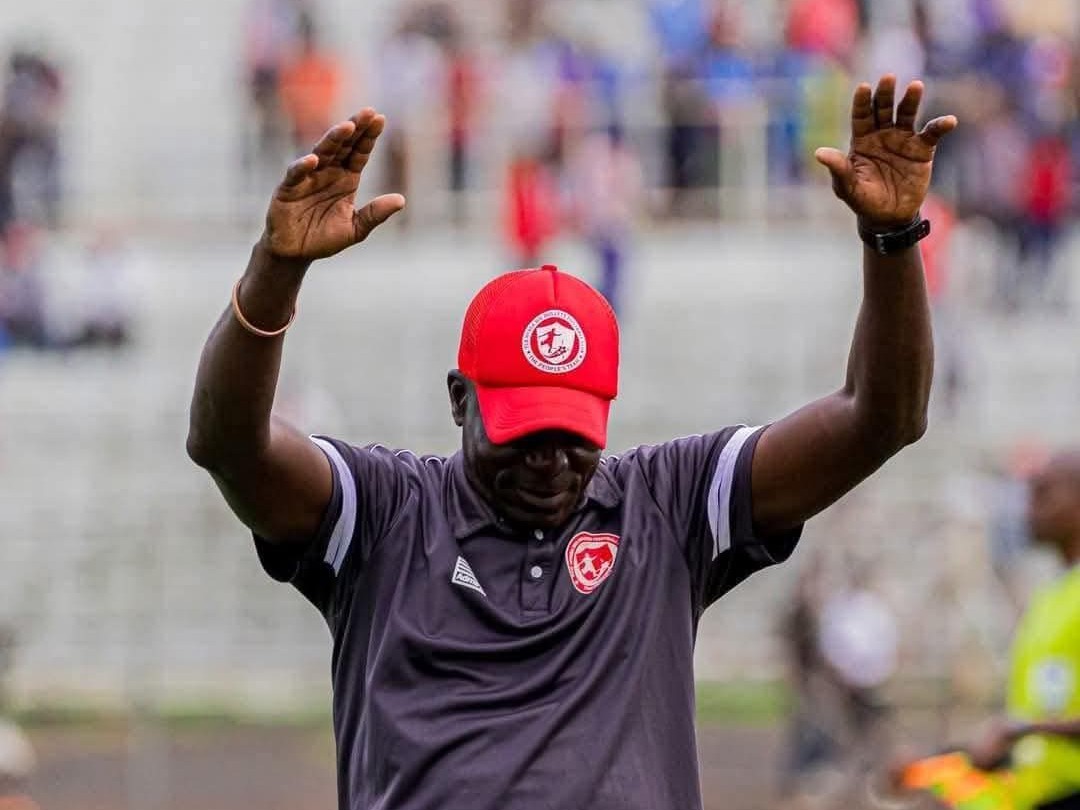
Gracious goodness! Another head has rolled at FCB Nyasa Big Bullets. The latest casualty is Gilbert Chirwa, whose departure this week after a “mutual agreement” with the club once again exposes the ruthless environment surrounding Malawi’s most decorated football institution.
After steadying and stabilising the Bullets ship in the choppy waters left by Peter Mponda, who had lost both the dressing room and a huge chunk of Bullets supporters, Chirwa has been shown the exit door.
Within his short spell at Bullets, he managed to win the Castel Challenge Cup and recently defeated their arch-rivals, Mighty Wanderers.
But beneath the noise surrounding Chirwa’s exit lies a far more uncomfortable question for Bullets management: are the club’s coaching changes merely skirting around deeper structural problems that no coach can easily solve?
On the surface, Chirwa’s reign never fully convinced sections of the Bullets faithful. Even during his successful caretaker spell following Peter Mponda’s dismissal, doubts persisted about whether he possessed the tactical authority, charisma and elite-level gravitas associated with managing a club of Bullets’ stature despite holding UEFA B and CAF A licenses, having cut his coaching teeth in 1991.
Supporters wanted more than stability. They wanted domination. So, while Chirwa delivered results — winning the Castel Challenge Cup and leaving unbeaten in the league after five matches — performances often lacked the authority and fluidity supporters associate with the Bullets identity.
However, reducing Bullets’ struggles to coaching inadequacy risks ignoring the larger reality unfolding behind the scenes.
For months now, Bullets have gradually been stripped of some of their most influential players without adequately replacing them with footballers of similar pedigree and impact.
The departures of Chikumbutso Salima and Babatunde Adepoju were not ordinary exits. They represented the loss of creativity, explosiveness, goals, unpredictability and match-winning quality.
Salima, in particular, had become Bullets’ primary attacking reference point. When games became tight, he carried the responsibility of unlocking defences through individual brilliance.
Adepoju, meanwhile, offered physical presence, movement and decisive finishing in the final third.
Replacing such players is not simply about signing bodies. It is about replacing quality, chemistry and tactical solutions.
The current Bullets squad increasingly looks like a team in transition — one still searching for identity, cohesion and reliable attacking mechanisms after key departures. Ironically, Peter Mponda himself alluded to this reality before his own dismissal.
During his tenure, Mponda repeatedly hinted that Bullets were undergoing a rebuilding phase following significant player exits. The squad was evolving, combinations were changing, and younger or less experienced players were being thrust into major responsibility.
Yet at Bullets, transitional periods are rarely granted patience.
Finishing second, particularly after years of domestic dominance, was interpreted not as part of a rebuilding curve but as an unacceptable decline.
The irony is striking.
Mponda was dismissed largely because Bullets no longer looked superior to rivals such as Mighty Wanderers, yet Chirwa recently managed to beat Wanderers 2-1 at the Bingu National Stadium in Lilongwe.
Now Chirwa departs facing similar criticism despite inheriting virtually the same structural problems. The pattern suggests a club treating symptoms while avoiding deeper diagnosis.
In modern football, coaching instability can sometimes create the illusion of decisive action. Changing the coach is visible, dramatic and emotionally satisfying to frustrated supporters. It signals urgency and ambition.
But coaching changes alone cannot instantly restore lost quality on the pitch.
Bullets’ recent tactical struggles often reflect personnel limitations as much as managerial shortcomings.
Against technically superior and more settled midfields, Bullets have frequently looked physically overwhelmed, structurally disconnected and creatively short. Recent derby defeats to Wanderers highlighted these problems brutally.
While Wanderers built continuity through players such as Blessings Singini, Daniel Kudonto and Sama Tanjong, Bullets appeared trapped between tactical experimentation and squad imbalance.
Even Chirwa’s controversial attempts to deploy Peter Banda centrally as a number 10 reflected a coach searching for creative solutions within an evolving squad lacking natural creators after Salima’s departure.
The experiment struggled largely because Banda’s strengths remain rooted in wide areas, not because the underlying tactical idea itself was irrational.
Similarly, Bullets’ squad no longer possesses the overwhelming depth that once allowed the club to dominate domestic football almost effortlessly. This is perhaps the central issue management must confront honestly.
For years, Bullets operated from a position of superiority built not only on coaching but on consistently assembling the strongest squad in Malawi. That advantage appears to have narrowed.
Rivals are recruiting smarter, developing clearer tactical identities and building continuity. Wanderers, in particular, now look more balanced, physically aggressive and tactically coherent than Bullets in key areas of the pitch.
Meanwhile, Bullets continue searching for quick fixes.
The reported shortlist of foreign coaches including Mark Harrison, Chris Kaunda and Ernst Middendorp reinforces the impression of a club once again hoping managerial change alone can restore authority.
Certainly, an elite interventionist coach with strong tactical identity could improve Bullets structurally.
There is merit in the argument that Chirwa, despite his experience and fatherly management style, may have lacked the tactical ingenuity required to elevate the team beyond its current limitations.
At times, his side looked reactive rather than dominant. Against stronger opposition, Bullets occasionally appeared tactically uncertain and creatively blunt.
But even the best coaches require appropriate tools. No tactical system can fully compensate for the repeated loss of elite-quality players without equally elite replacements.
Football history repeatedly shows that sustainable success comes from alignment between recruitment, squad planning and coaching philosophy.
Bullets currently appear trapped in a cycle where coaches carry the burden of expectations while deeper squad-building questions remain unresolved.
That is what makes Chirwa feel less like the root cause of Bullets’ problems and more like another victim of circumstance.
His record itself hardly reflects catastrophe. In 12 competitive matches, he won eight, drew three and lost only once. He delivered silverware and left unbeaten in the FDH Bank Premiership.
At many clubs, that would represent stability. At Bullets, however, context matters more than statistics.
The club’s identity has long been tied to dominance — not merely winning matches, but controlling games, overwhelming rivals and maintaining psychological superiority, especially against Wanderers.
That aura has faded. And until Bullets address the broader structural challenge of replacing elite departures with equivalent quality, improving midfield balance and building a coherent long-term football identity, the revolving door in the dugout may continue spinning regardless of who occupies the technical area.